Brewing / Pu-erh
Wake the leaf twice.
The aged Chinese tea has been pressed, fermented, and asleep in a paper wrapper for years. The first pour isn't a brew. It's a knock at the door.
The premise
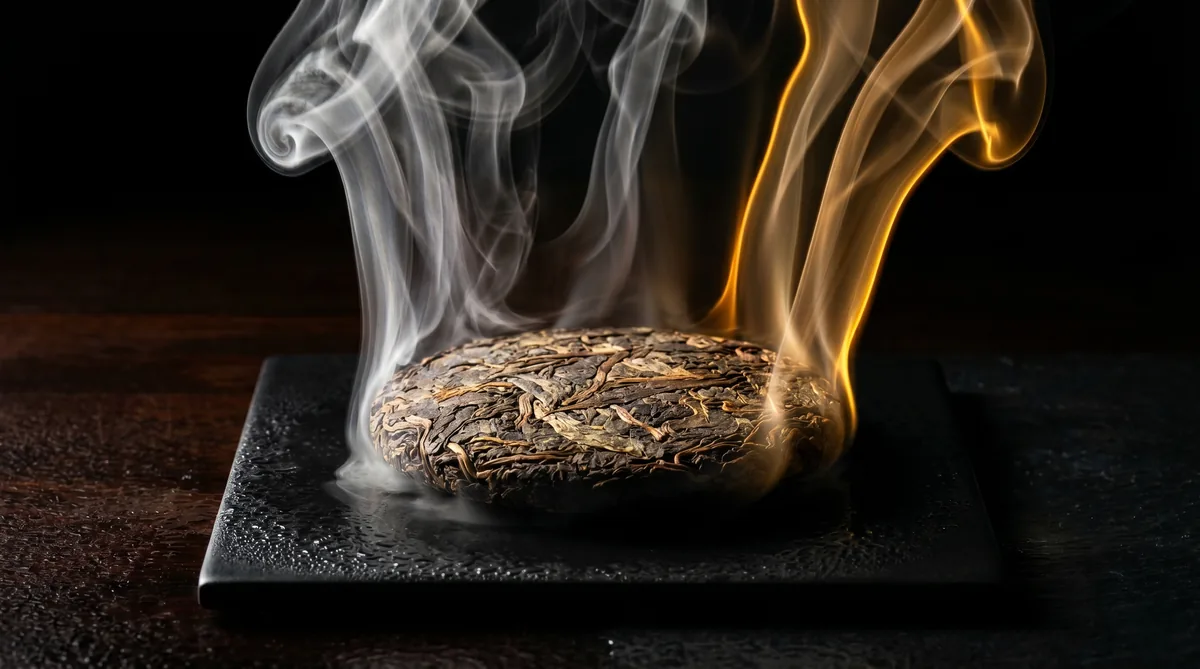
Pu-erh is the only tea that's intentionally aged, and almost the only one that's microbially fermented. Both facts shape how you brew it. The leaf has been compressed into a cake or nest for a long time, sometimes decades, and it doesn't open all at once. Water boiled at a full 212°F is the right temperature. Two rinses, not one, before the first real steep. And if you do it gongfu style, plan on eight to ten infusions, each one a different stage of the leaf telling its story.
Sheng or shou: know which one's in your hand
Sheng (生, raw) is the original pu-erh: pressed green, then left to age naturally. Young sheng is grassy, astringent, almost a green tea with a kick. Agood Bulang mountain sheng at five years reads honeyed and stone-fruity. At twenty it reads of leather, dried mushroom, old books.
Shou (熟, ripe) is the modern shortcut: sheng put through a controlled wet-pile fermentation that takes it from raw to aged in about sixty days. The flavour is dark, earthy, sometimes calledpetrichor in a cup. Ashou mini tuochais the easiest way in: already aged, already mellow, hard to brew badly. Start there.
The timer
Wash, wake, then count.
Style
The wash
0:03
Ready.
- Water
- 212°F / 100°C
- Leaf
- 7–8g / 120ml
Wash, wake, then short infusions that lengthen as the leaf softens.
Open it full screen, or keep it on your phone: the steep timer works offline.
The ratio
Heavier than you think.
Pu-erh wants more leaf than most teas. The compressed format is denser, and the flavour compounds are slower to release. For a Western mug, use about 5g per 240ml, roughly a heaped tablespoon of broken cake. Forgongfu in a 120mlgaiwan, use 7 to 8g. The cake will fight you a little; it's compressed. AYixing pickor a thin butter knife works. Pry from the edge, not the centre. Try to keep the pieces whole; broken leaves brew bitter.
Temp
212°F
Gongfu leaf
7–8g
Rinses
2
The sequence
Knock, knock, then brew.
- 00.Warm the vessel. Boiling water into the empty gaiwan or pot. Swirl. Dump it. The ceramic has to be hot before the leaf goes in or the first rinse barely registers.
- 01.First rinse: the wash. Add the leaf. Pour boiling water over it. Cover for three seconds. Pour off completely. This one washes off storage dust and any surface bitterness from the press. Discard it. Don't drink it. Even with a clean cake, you don't want the first water in your mouth.
- 02.Second rinse: the wake-up.Pour again. Cover for five to ten seconds. Pour off. This one is the leaf opening. The colour comes through honey-amber for shou, pale gold for sheng. You can drink it now (some do, it's full of the first volatile aromatics) but most pour it over the cups to warm them. Either way the leaf is now awake.
- 03.First real steep: 15 seconds.Fill the gaiwan to the rim. Cover. Count to fifteen. Pour smoothly into the pitcher and from there into the thimble cups. Shou will be near-black, almost opaque. Sheng will be deep gold to copper depending on age. The first cup of a good pu-erh should taste like wet stone, dark wood, and something sweeter underneath: date, fig, dried apricot.
- 04.Second through sixth: short, then longer. Steep two: 10 seconds. Steep three: 15. Steep four: 25. Steep five: 40. Add ten or so each round. By steep six the leaf is at its full softness; the cup will be at its sweetest, most rounded. This is the cup people remember.
- 05.Seventh through tenth: let the leaf retire. The flavour thins. The sweetness sits longer on the finish. Around steep nine or ten the cup goes light and the leaf is telling you it's done. A good shou will go a full ten infusions. A well-aged sheng can run twelve. A young sheng tires faster: six or seven, and it's spent.
If you don't want to gongfu it
Grandpa style. One mug. All day.
The Chinese workshop method: a fistful of leaf in a tall glass mug, boiling water poured in, no strainer. Drink down to the leaves, top it off. The leaf sits in the cup for hours and the cup stays drinkable; pu-erh is one of the few teas that doesn't punish that approach. The brew stays mellow, gets slightly sweeter as the day goes on, and the leaves give and give. Best method for a working morning. Aglass potor a tall heat-safe glass works fine; you want to see the colour deepen.
What changes by age
Young sheng (0–3 years). Treat it almost like a green. Steeps shorter, rinses one not two, and don't be surprised if it's astringent. That's the youth. It's supposed to mellow with time. Some buyers age their cakes themselves; a paper-wrapped sheng on a clean shelf gets demonstrably better over five to ten years.
Aged sheng (5+ years). The whole sequence above applies. The double rinse matters more, not less, because the leaf has been sitting longer. The flavour develops over the first three infusions. Don't judge a sheng by steep one. The cup at steep four is the cup the cake was bought for.
Shou (any age). Already aged on purpose. Forgiving, dark, never grassy. The double rinse is critical here: shou is wet-pile fermented, and the first rinse always carries a faint funk that the second one clears. Steeps two through five are the sweet spot. Will run ten infusions without complaint.
Vessel
Porcelain first. Clay only when you've committed.
A porcelain gaiwanis the right first vessel for any pu-erh. Neutral. Easy to clean. Lets you brew sheng on Tuesday and shou on Wednesday without crossing the flavour. AYixing zisha potis the long game: porous, unglazed, dedicated forever to one type of pu-erh (almost always shou). The clay absorbs the oils, and after a hundred brews the pot itself becomes part of the flavour. It's a beautiful object. It's also a commitment. Brew in porcelain until you know which pu-erh you keep coming back to. Then buy the Yixing for that one.
House note
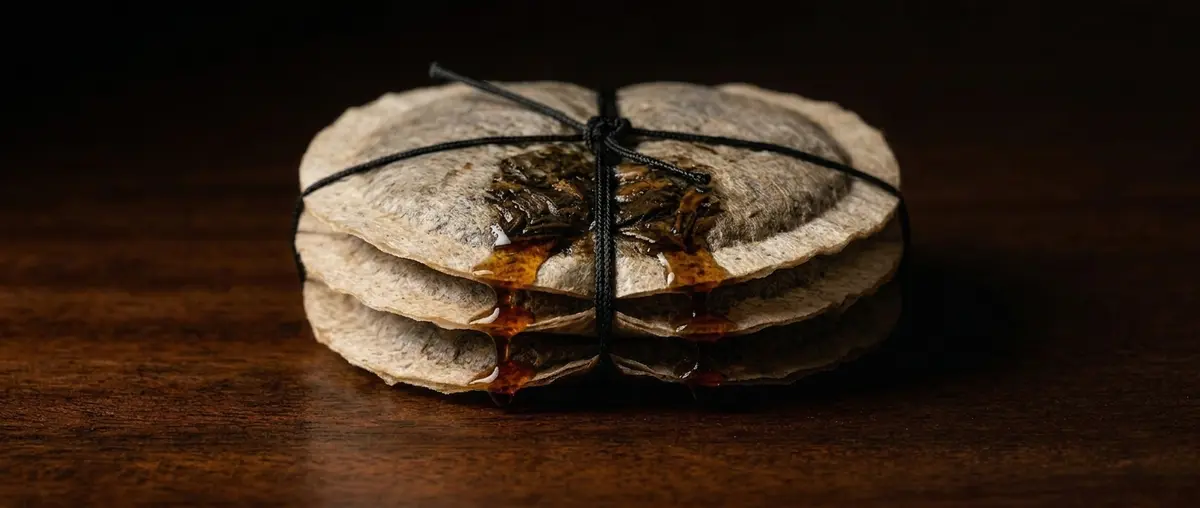
A black tea wants three minutes and an answer. A pu-erh wants two rinses and an evening. Give it the time. The cup at steep five is what you bought the cake for: the four before it were the leaf getting ready to say something.