Brewing / Matcha
Powder. Hot water. Wrist.
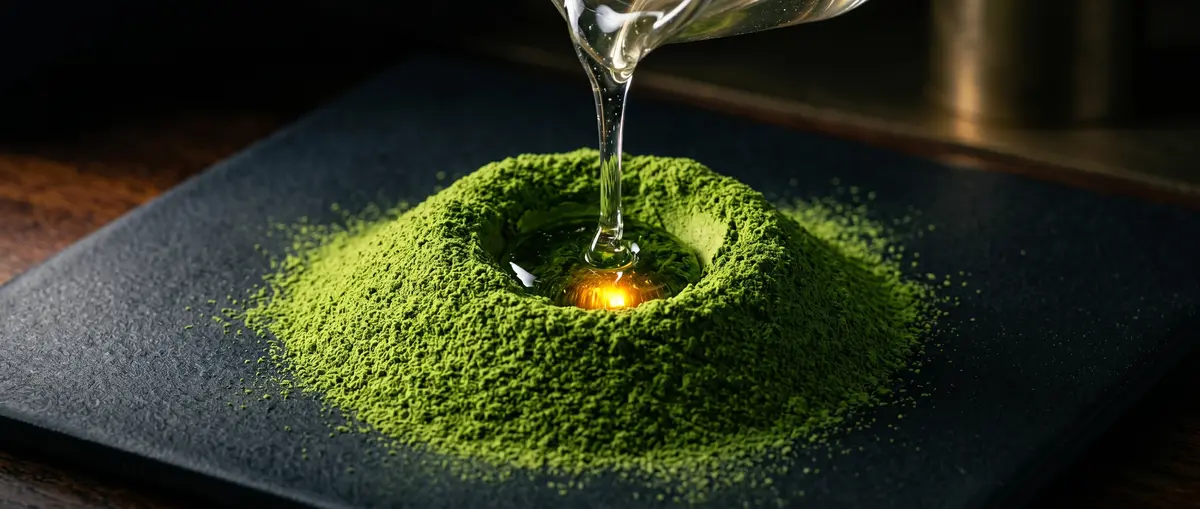
The leaf is already pulverized when it hits the bowl. Everything else, the heat, the ratio, the wrist, is just keeping it from going bitter.
First, the leaf
Matcha is shade-grown Japanese green tea, stone-ground into powder so fine it pours like flour. You drink the leaf, not an infusion of it. That changes everything. Grade matters more than it does anywhere else in tea: ceremonial grade for whisking, culinary grade for cooking and lattes. Don't whisk culinary matcha and call it bitter.Ippodo Sayakaand Jade Leaf ceremonial are the two clean entry points. SaveAiya cooking gradefor the lattes and the baking.
What you need
A wide ceramic bowl: a chawan. A bamboo whisk with about a hundred prongs: a chasen. A bamboo scoop, a chashaku, or any half-teaspoon will do. Astarter setincludes all three for less than the matcha itself. Atemperature-controlled kettle earns its keep here: the difference between 165°F and 185°F is the difference between sweet umami and stewed seaweed.
The timer
Rest the water. Then the wrist.
Style
Kettle rest
1:30
Ready.
- Water
- 175°F / 79°C
- Leaf
- 2g / 70ml
Rest the boiled water ninety seconds, pour, then whisk fast Ms and Ws for twenty.
Open it full screen, or keep it on your phone: the steep timer works offline.
Two styles
Thin and thick. Pick which kind of morning.
Usucha
薄茶: the thin one
- 2g matcha (1 heaped chashaku, ~½ tsp)
- 70ml water at 175°F
- Whisk fast: Ms and Ws across the bowl
- Foamy crema across the top
The daily-drinker style. Bright, vegetal, light enough to drink on its own. Most ceremonial-grade powders sit in this lane. Foam is the tell: a good whisk builds a fine, persistent crema that holds for a minute.
Koicha
濃茶: the thick one
- 4g matcha (2 heaped chashaku, ~1 tsp)
- 30ml water at 175°F
- Whisk slow: knead, not foam
- Glossy and viscous, like green paint
Twice the powder, less than half the water. Reserved for premium ceremonial grades: koicha exposes everything, so anything bitter or stale will read louder. The traditional tea-ceremony pour. Closer to espresso than to tea.
The wrist
Whisk from the wrist, not the shoulder.
- 01.Sift the powder. Matcha clumps in the tin. Push it through a small mesh sieve into the bowl. Sounds finicky. Isn't. Clumps don't whisk out; they hide and then surprise you on the last sip.
- 02.Water at 175°F, not boiling. Boiling water turns matcha bitter on contact and scorches the amino acids that make it sweet. If you don't have a variable-temp kettle, boil and rest for ninety seconds.
- 03.Pour, then whisk. Pour water over the powder. Hold the chasen vertical, fingers loose around the handle. Move your wrist back and forth: fast Ms and Ws across the surface of the bowl. Don't stir in circles. Circles fold air out. Ms and Ws fold air in.
- 04.Twenty seconds, then float the whisk.A good usucha builds foam in about twenty seconds. Finish by drawing the whisk slowly up through the centre: that breaks any large bubbles and leaves a tight, fine crema across the top.
What goes wrong
Bitter cup. Water too hot (almost always), or culinary-grade powder, or matcha that's been open longer than two months. Drop the water to 170°F, check the date on the tin.
No foam. Whisk too slow, water too little, or a chasen that's been compressed in storage: soak it in warm water for thirty seconds first to splay the prongs.
Grainy texture. Skipped the sieve. Or the grind is coarse, a sign you bought culinary when you wanted ceremonial.
Hay flavour. The tin's been open too long. Matcha oxidizes fast: keep it sealed, refrigerated, and finish a 30g tin in a month.
The latte detour
A matcha latte is just usucha with steamed milk poured in instead of finishing the cup. Use culinary grade. The milk smothers the nuance that makes ceremonial grade worth the money. Whisk the matcha with a small amount of hot water first to make a paste, then pour the milk over. Sugar to taste. No judgment.
House note
Ceremonial grade in a bowl. Culinary grade in a latte. Get those two right and you've solved most of the matcha discourse.